

What Does It Cost to Live at 50 Percent?
Second Chances Are For People Who Were Paying Attention!

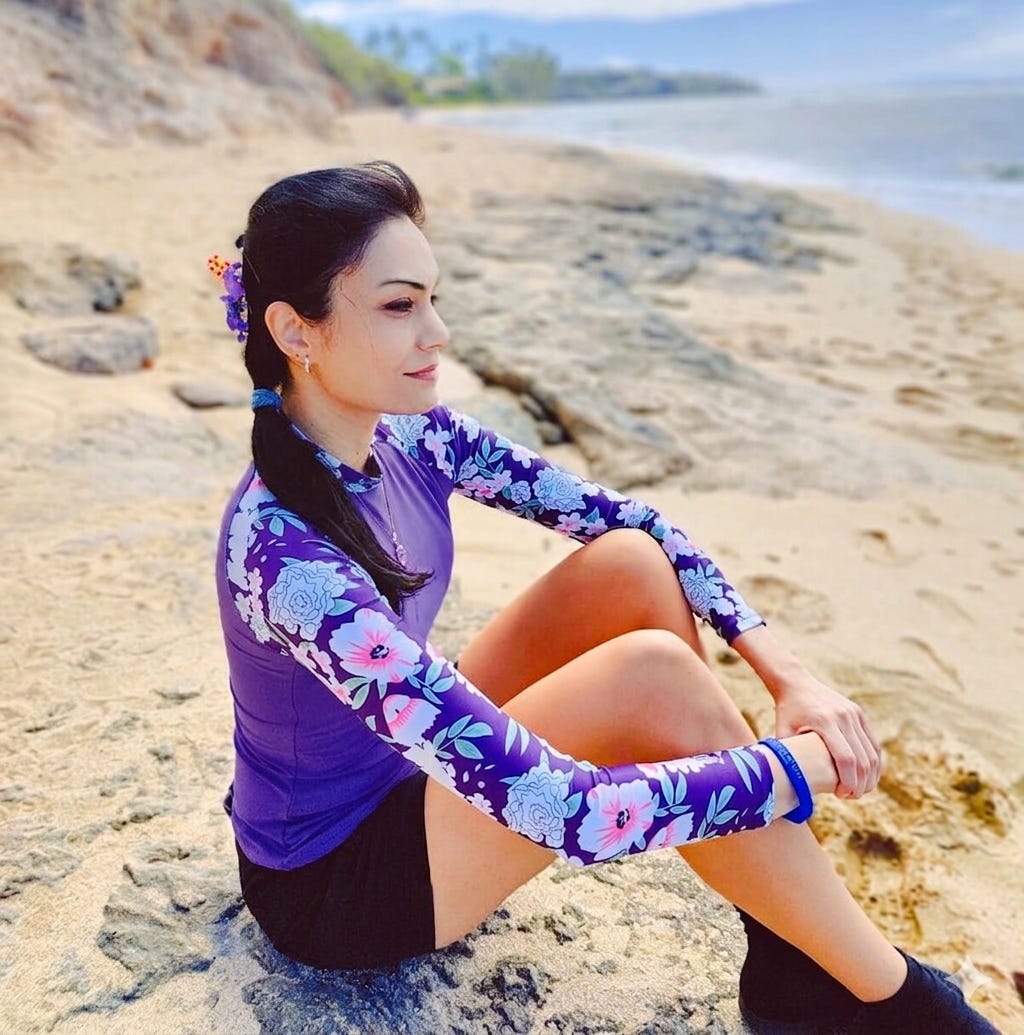
March 2017. Trinidad.
Fourteen years I hadn’t been back.
Do you know what fourteen years does to a place? To you?
The cousins whom I cared for are driving cars now. Having opinions about politics. The streets that felt enormous when I was little have shrunk to something almost manageable, and the only thing that doesn’t change, the only thing that hits you exactly the same every single time, is the smell.
Doubles on Sunday morning. Rain on hot asphalt. Garlic and shadow beni from someone’s grandmother’s kitchen, doing something serious.
Your nose doesn’t forget. Your nose is keeping receipts from 1998 and will present them without warning.
I didn’t plan the timing. My paperwork cleared two weeks before my grandmother’s stroke. Fourteen years of not being able to go anywhere and then suddenly I could, and almost immediately I needed to, because that’s how life works when it wants to make a point, isn’t it?
I’ve been thinking about what that timing means ever since.
I’ve decided to let it be mysterious.
So I went. And for a few golden, ridiculous, beautiful days, I had my family back.
I had my mother back.
My mother. God.
She was the kind of woman whose smile arrived in a room before she did. You know those people? Living at full volume without even trying—laughing loudly, loving loudly, taking up exactly as much space as she needed and not one inch less.
But she wasn’t always that way.
When I left, she was smaller. Quieter. A woman who made herself compact in corners, who softened her voice when my dad was talking. Migration does things to the people left behind that we don’t see when we’re the ones who left.
Fourteen years is long enough for a woman to shed skins she never wanted to wear in the first place.
Or maybe, she was always this woman, and I was just finally old enough, far enough away, humbled enough by my own life to actually see her.
When I said goodbye at the end of that trip, she hugged me with the ferocity of a woman who has decided your ribcage is an acceptable casualty.
And then she turned to walk away.
And she stopped.
And she looked back over her shoulder and waved.
Grinning. That big, enormous, iconic grin.
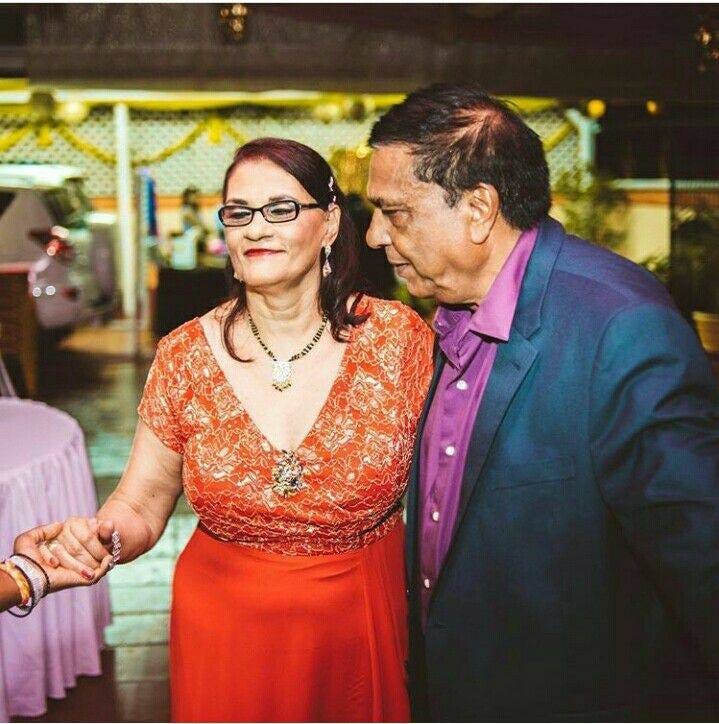
She was completely there. All the way there. Full volume.
I noted it the way you note a good song playing somewhere. Warmly. Briefly. And then I moved on because I had a flight to catch and things to get back to. New York City was calling.
Besides, I was coming back in November. We had already booked it.
This was not the last time.
Except it was.
Three weeks later, my mother was dead.
Milan Kundera wrote about how the present, once lived, becomes permanent and irretrievable. Which sounds like something someone cross-stitches onto a blanket but is actually one of the most crushing ideas I’ve ever encountered. Whatever is happening right now is being permanently written into the record of what has existed.
You can’t get it back.
You can only be in it or not.
I was not in it. I was at fifty percent. Half a person on a sidewalk watching a goodbye.
There’s this thing psychologists call ‘mind-wandering’—the technical term for when part of your brain is already three steps ahead while the current moment is still happening. And it’s adaptive! Very useful for planning, problem-solving, and being a functional adult.
It is also, in the specific context of the people you love, completely heartbreaking
Harvard’s been studying what makes humans happy for like a hundred years, and what they keep finding, over and over, is that the quality of your relationships is the greatest predictor of well-being.
Not money.
Not success.
Relationships.
And yet we treat the people in those relationships like browser tabs we can always come back to.
My mother was a tab I did not get to come back to.
Living at low volume doesn’t feel like a choice. The always-running background tab feels normal because it’s been running so long we can’t remember what quiet feels like.
Living at full volume is uncomfortable.
Being completely present means feeling things all the way through instead of skimming the surface. It means the good stuff hits harder, and the hard stuff lands harder, and you don’t get to soften either one by being somewhere else in your head.
We turn ourselves down because turning all the way up is a lot.
Turned all the way up means when something ends, you FEEL the whole fucking ending.
But here’s the other side. The part I didn’t understand until it was too late.
Turned all the way up also means when something is beautiful, you feel the whole beauty. When someone you love is standing in front of you, you get all of them. Not a warmly-noted song in the background. The whole thing. In full. While it’s happening.
Second chances are weird gifts because they arrive disguised as ordinary moments.
There is no label that says “SECOND CHANCE, HERE IT IS, PAY ATTENTION THIS TIME.”
It’s probably the same person, the same type of situation, a slightly different version of you if you’ve learned anything at all.
A second chance isn’t a reset button. The first time is still in the room. Still watching. Testing, Testing whether you absorbed anything.
I didn’t want my mother’s death to just hurt.
I wanted it to teach me something I could carry for the rest of my life.
When I found out last October that my father was ill, something in me changed.
There was no debate. No “let me check my calendar.” No “I’ll figure out the timing.”
We booked the trip, and we went, and THIS time I was not going to be at the airport in my head.
This time, I was going to turn it all the way up.
There’s a Japanese concept called “ichigo ichie”—one time, one meeting—which comes from the tea ceremony and means that every single encounter is its own unrepeatable universe and will never ever come again, even if the same people meet a thousand more times.
I understood that concept in theory for years.
In February, I understood it in my bones.
When my father said his goodbyes, I was in that room in every sense of the word. I watched his hands — the way a whole life of work had written itself into the lines of them.
I listened to the way his voice moved, slower now, more considered, the pauses carrying as much gravity as the words. I let the silences be silences instead of rushing to fill them. I noticed the light. I noticed his face. I noticed the smell of the room, the heaviness of the air, and the sound of the world outside the window continuing, as if none of this were happening.
I held the moment the way you hold something you already know you won’t be able to hold for much longer. Carefully, with both hands, without looking away.
Not fifty percent.
All of it.
FULL VOLUME.
We talk about second chances like they’re about the other person. About honoring them, being there for them, giving them what we didn’t give before. And that’s true, and it matters a lot.
But second chances are also about what YOU ARE capable of becoming.
My mother’s death broke my assumption that there would always be more time into pieces so small I could not put them back together the same way. What I built in their place was a completely different relationship with time. One that takes right now seriously. One that shows up not later but now.
She’s still teaching me things.
That’s something.
Someone once told me that grief is just love with nowhere to go. I have been turning that sentence over for years, and I keep finding more inside it. Because if that’s true, then the answer to the grief of missed moments is not to grieve better. It’s to love better, in real time, while the person is still standing in front of you.
Simone de Beauvoir wrote about her mother’s death and said she was blindsided anyway. Even she wasn’t ready. Her conclusion was that there is no death that is not a sudden death, because it is always the end of a world, and no amount of thinking prepares you for the actual experience of a world ending.
Which means that the fact should make us more present with the people in our world while those worlds are still intact.
We know this. This is the most repeated lesson in the entire history of human wisdom. Be present. Savor the moment.
The Stoics said it. The Buddhists said it. Mary Oliver wrote a whole poem about it:
"Tell me, what is it you plan to do
with your one wild and precious life?"
Half the internet printed it on a canvas and hung it in their hallway, and then immediately picked up their cellphone.
The knowing is not the doing.
The doing requires something the knowing cannot give you, which is the actual, cellular, bodily memory of what it costs to not do it. What it costs to live at fifty percent. What you miss when the volume is down, and someone you love is doing something unrepeatable right in front of you, and you are already at the airport in your head.
I have that memory now. I paid for it in a way I would not wish on anyone. And because I have it, when my father said his goodbyes, I was there. Fully. Scared and fallible and grateful and turned all the way up.
I watched his face. I held his hands. I did not look away.
Thank you so much for taking the time.
Shout-out to Sameer Sohail for keeping me caffeinated!
Smashing that ❤️ button or sharing this post keeps the wheels on this greasy squirrel wheel.