
Managing Different Generations
Swipe Left On Stereotypes

Why Underestimating Gen Z is a Fool's Game!
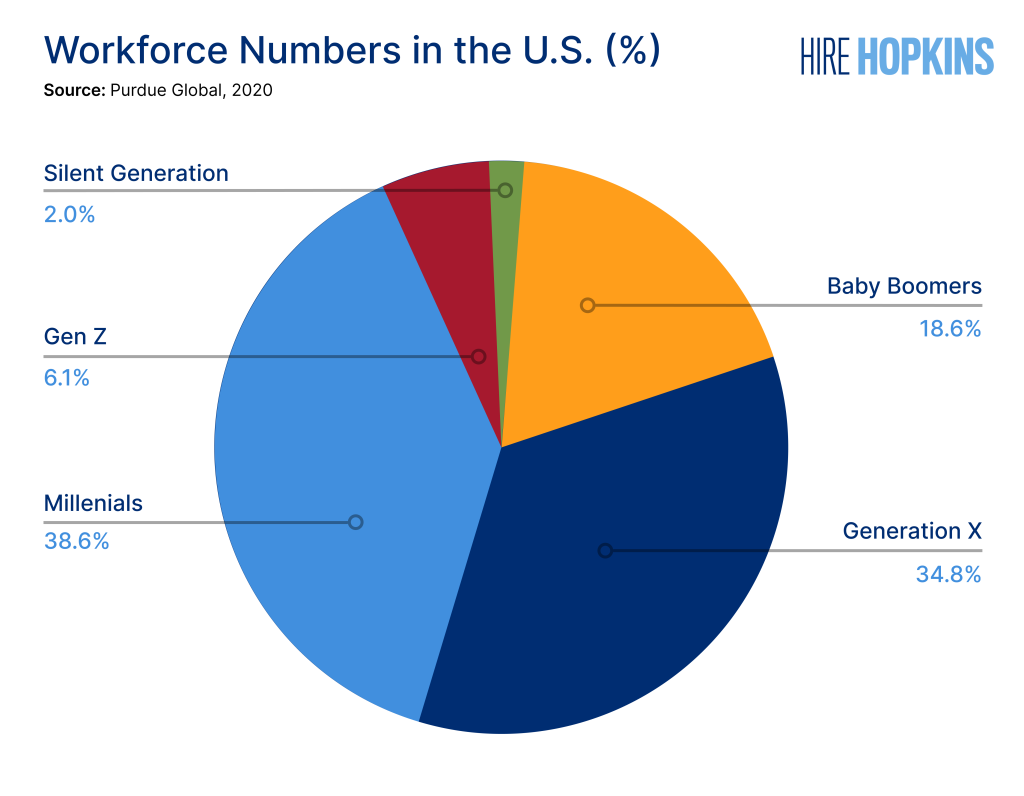
Gen Z is on the brink of outpacing baby boomers in the workforce by next year, according to Glassdoor's analysis of census data.
This shift is pivotal as the workplace ethos is increasingly shaped by Gen Z's preferences for:
Inclusion
Flexibility
Work-life harmony
Remote and Hybrid Models
Unique communication styles
Development and opportunities
My departure from my last full-time role—a draining abyss that was gradually eroding my zest for life—led to an eye-opening realization - the corporate world is teetering on the edge of madness.
Success in this landscape isn't about intellect - it's about being a spineless yes-person.
A connoisseur of corporate crap.
But why have we tolerated this farce for so long?
Why has my generation (Gen X) glorified enduring hardship as some perverse badge of honor? Our consent to being marginalized has created a sense of disillusionment, which Gen Z is now challenging by refusing to adhere to these outdated rules.
Could it be that they're on to something?
While their perspectives are often dismissed as naive or entitled, they might be correctly identifying the rigidity of an outdated system.
Why do we continue to support a system that demands we bend over backward for a mere acknowledgment, work unreasonable hours, and regard colleagues as family, when this 'family' would not hesitate to discard us at the first sign of declining profits?
Reflecting on this, especially now as I look back on my career, I realize that the infrequent expressions of gratitude for achieving the impossible felt less like genuine appreciation and more like an expectation to continually do more for less.
What did that make me?
A chump?
The celebration of overwork and the expectation of constant overachievement isn't just ludicrous—it's harmful.
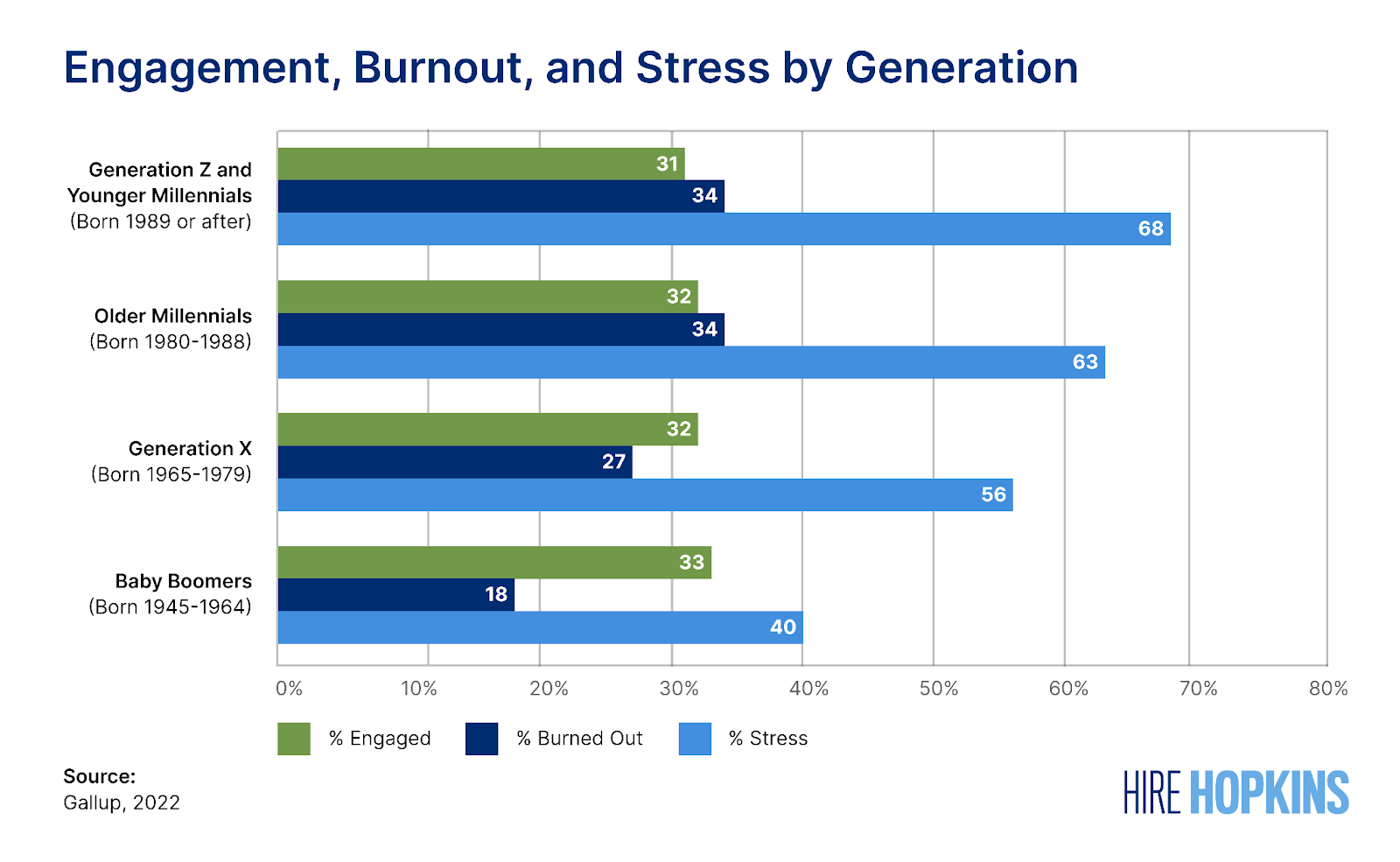
My generation (Gen X) is expected to work longer than previously anticipated and is likely to be the first to enter retirement with less financial security than that of our parents and grandparents.
The Schroders 2023 U.S. Retirement Survey recently revealed that 61% of non-retired Generation X individuals lack confidence in securing their ideal retirement, in contrast to 49% of millennials and 53% of non-retired baby boomers who feel the same. From discussions I've had, it's clear that for Generation X, an ideal retirement doesn't necessarily involve extravagant vacations or owning private yachts. Instead, it's about achieving a basic level of financial stability that can adapt to their evolving needs throughout their senior years.
So YES - It’s harmful!
The communication gap between generations leads to the misinterpretation of Gen Z's reasonable desires for work-life harmony as a lack of resilience or commitment.
In truth, Gen Z is at the forefront of tackling entrenched cultural maladies, long nurtured by conventional wisdom that clung to obsolete success metrics.
This generation is boldly calling out the old guard's preference for burying their heads in the sand over facing issues head-on.
It would be wise to listen, evolve outdated perspectives and meet in the middle.
Bridging the Generation Gap in the Workplace
The modern workplace is increasingly generationally diverse, with Baby Boomers, Gen X, Millennials and Gen Z all collaborating. While there are certainly challenges in bridging different perspectives shaped by age and experience, the payoffs of tapping into generational diversity are well worth the effort.
The most obvious advantage is a wider range of soft skills available on a cross-generational team. Veteran Boomers have finely-tuned critical thinking and conflict resolution skills developed over decades of work.
Gen X offer resourcefulness and comfort with autonomy, perfect for innovation. Millennials tend to be stellar collaborators and comfortable with emerging technologies.
Meanwhile, Gen Z bring digital fluency, inclusion values and a nose for spotting outdated processes.
Of course, maximizing these complementary strengths requires intention, empathy and respect. Companies must actively create an age-inclusive culture.
One critical strategy is two-way mentorship programs.
Partnering younger employees just starting out with experienced staff nearing retirement creates bonds that break down generational barriers. Both benefit from new perspectives: Younger staff gain wisdom and older staff stay tapped into youth trends.
Beyond better leveraging soft skills, generational diversity also leads to better ideas. Blending different life viewpoints avoids narrow thinking and “groupthink” pitfalls. Encouragingly, research shows intergenerational collaboration stimulates more creativity and innovation.
In the modern era where businesses live or die on the ability to adapt quickly, the creative friction sparked by generational diversity should be embraced, not avoided. The research makes clear that age-inclusive teams drive better decisions and workplace culture.
Transitioning to a cross-generational workplace has growing pains, yes. But the long-term payoff - expanded innovation, stronger teamwork, and retention of irreplaceable institutional knowledge before staff retire - makes overcoming them well worth the effort for any forward-thinking organization.
Navigating Generational Diversity in the Workplace: Understanding Values and Strategies for Retention
**1. Traditionalists (Born 1928-1945):**
Values:
Loyalty, respect for authority, hard work, and dedication.
Strong sense of duty and responsibility.
Preference for stability and tradition.
Ideal Work Environment:
Hierarchical structure with clear roles and responsibilities.
Formal communication channels.
Opportunities for recognition and respect for seniority.
Work Style:
Methodical and detail-oriented.
Prefers face-to-face communication.
Willing to work long hours to achieve goals.
Retention Strategies:
Offer opportunities for mentorship and knowledge transfer.
Recognize and celebrate their contributions and experience.
Provide options for flexible work arrangements to accommodate their needs.
**2. Baby Boomers (Born 1946-1964):**
Values:
Optimism, teamwork, and personal fulfillment.
Desire for meaningful work and making a difference.
Embrace diversity and social change.
Ideal Work Environment:
Collaborative and inclusive culture.
Opportunities for career advancement and professional development.
Work-life balance initiatives.
Work Style:
Thrive on collaboration and networking.
Prefer structured feedback and recognition.
Willing to adapt to new technologies but may prefer traditional methods.
Retention Strategies:
Offer opportunities for leadership roles and mentorship.
Provide avenues for ongoing learning and skill development.
Recognize their contributions and expertise in shaping the organization.
**3. Generation X (Born 1965-1980):**
Values:
Independence, work-life balance, and self-reliance.
Desire for autonomy and flexibility in work arrangements.
Embrace diversity and innovation.
Ideal Work Environment:
Results-driven and flexible work environment.
Opportunities for autonomy and creativity.
Embrace of technology for efficiency and collaboration.
Work Style:
Value work-life balance and prioritize family commitments.
Prefer direct and concise communication.
Seek opportunities for continuous learning and skill development.
Retention Strategies:
Offer flexible work arrangements, including remote work options.
Provide opportunities for professional growth and advancement.
Foster a culture of transparency and open communication.
**4. Millennials (Born 1981-1996):**
Values:
Purpose, diversity, and work-life integration.
Desire for meaningful work aligned with personal values.
Embrace of technology and innovation.
Ideal Work Environment:
Collaborative and inclusive culture that values diversity.
Opportunities for personal and professional development.
Flexible work arrangements and a focus on work-life balance.
Work Style:
Tech-savvy and adaptable to change.
Prefer feedback and recognition in real-time.
Seek opportunities for career advancement and skill development.
Retention Strategies:
Provide opportunities for career growth and advancement.
Offer mentorship and coaching programs.
Create a culture that values diversity, inclusion, and social responsibility.
**5. Generation Z (Born 1997-Present):**
Values:
Authenticity, diversity, and social impact.
Desire for flexibility and work-life balance.
Comfort with technology and digital communication.
Ideal Work Environment:
Flexible and tech-enabled workspace.
Opportunities for experiential learning and skill development.
Embrace of diversity and inclusion.
Work Style:
Prefer digital communication and collaboration tools.
Seek feedback and recognition in real-time.
Value opportunities for creativity and innovation.
Retention Strategies:
Offer opportunities for skill development and continuous learning.
Provide flexibility in work arrangements and schedules.
Create a culture that fosters inclusivity, innovation, and social impact.
The key is recognizing that generational diversity is a feature, not a bug. Each cohort’s unique strengths were forged by the economic and cultural forces of their impressionable early years.
Wise managers realize no generation has a monopoly on virtue, intellect or drive.
Instead, accept the workplace makeup of Traditionalist resilience, Boomer optimism, Gen X independence, millennial social conscience and Gen Z’s digital intuition.
This multi-dimensional team can zoom past less dynamic competitors when they leverage their rich experience and future-forward outlook in equal measure.
Now, that’s a workforce built to weather any storm while staying keenly tuned to the evolving horizon.
This is such an interesting article, Neela! I am part of the Millennial group and it was seen that if you worked yourself to the bone, you were put on a pedestal and if you didn't, you weren't worthy of praise.
Was just talking about this with a change manager yesterday who was having to do a leadership session with a group of teams struggling with diverse views due to age, stage and beliefs. We need unity not conformity.
Thanks Neela